·
Sep, 2026
·
Sep, 2026
By 2028, Gartner expects AI agents to intermediate 90% of B2B buying: over $15 trillion in spend. Stacking AI on a broken partnership model won't fix it. The internal engine has to be right first, before AI can scale the co-selling on top of it.
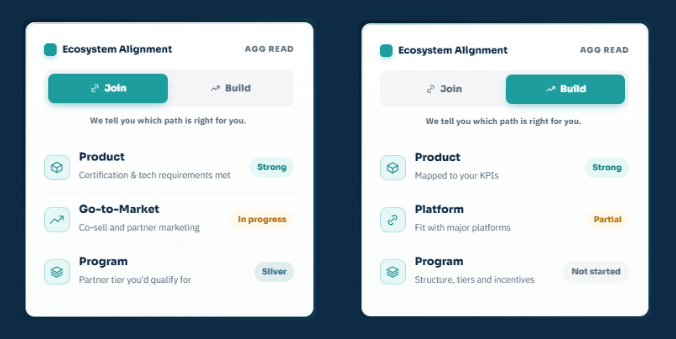
Here’s a 5-step plan you can’t skip:
1. Internal Alignment First.
Get Product, GTM, and Commercial aligned on the actual motion.
Joining a platform means aligning around someone else's roadmap and rules of engagement.
Building your own means setting those rules for others.
Running both? Assign clear ownership so teams aren't pulling in different directions.
2. Selective Partnering.
Back partners who drive real revenue.
Joining a platform means picking a handful worth co-selling with.
Building your own means being deliberate about who you let in early, since those first partners set the bar for everyone after. Fewer, better partners, either way.
3. Co-Created Blueprints.
Define clear commitments: who owns the lead, who manages joint delivery, and how revenue flows.
Joining a platform, you're negotiating your share and delivery role inside their existing rules.
Building your own, you're writing the rules: referral fees, tiering, API access, joint GTM commitments. Put it in writing.
4. AI & Agentic Acceleration.
Modernise the workflow.
Joining a platform means plugging into their agent workflows and intent signals, on their terms.
Building your own means choosing your own AI stack, and setting the rules for what data partners can see.
Either way: automated account mapping, shared intent signals, and real-time partner enablement, with human-in-the-loop validation on anything that touches a relationship.
5. Usage-Based Tracking.
Measure success by joint pipeline velocity and real product adoption. Not sign-ups. True whether you're inside someone else's ecosystem or running your own.
If you're standing this up for the first time, or just hired someone to own it, that internal readiness question is where to start before locking in a platform strategy.
Align Growth Global Ecosystem Jumpstarts give you an objective, evidence-based read on internal readiness and position in the ecosystem: starting with a two-week diagnostic, or the full six-month execution-ready plan in four.
Every engagement is run directly by AGG's founding team, operators who built ecosystem programs inside Microsoft and Red Hat. It's the fastest path to VP-Ecosystem-level clarity, without the time or cost of hiring and ramping one.
Team Join or Team Build?
Find out more on Ecosystem Jumpstarts at: aligngrowthglobal.com/ecosystem-jumpstarts
Neela Mistry-Bradshaw - GTM & Ecosystem Strategy
Co-Founder & Managing Director
Align Growth Global. Boston. London.